The world of mobile music production has evolved dramatically in recent years, with smartphone-based DAWs (Digital Audio Workstations) now offering capabilities that rival their desktop counterparts. For composers and producers who have moved beyond the basics, mastering advanced techniques in mobile sequencing apps can unlock professional-grade results. The key lies in understanding the nuanced features hidden beneath the surface of these deceptively simple interfaces.
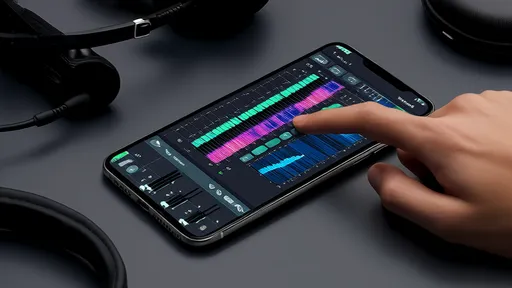
One often overlooked aspect of mobile music production is the strategic use of automation lanes. While most beginners focus on note input and basic mixing, seasoned producers leverage automation to breathe life into their tracks. Apps like FL Studio Mobile and Cubasis allow for intricate automation of parameters ranging from filter cutoffs to reverb decay. The secret is to think beyond simple fade-ins and experiment with drawing custom automation curves that respond to the emotional arc of your composition. This level of detail transforms static loops into dynamic arrangements that evolve over time.
The integration of third-party plugins has become a game-changer for mobile producers working at an advanced level. Where stock plugins once limited creative possibilities, platforms like AUM on iOS now support AUv3 plugins that rival professional studio tools. Savvy producers are building custom effect chains by combining specialized plugins from different developers - perhaps pairing a surgical EQ from one manufacturer with a characterful compressor from another. This modular approach allows for signature sounds that stand out in a crowded musical landscape.
Advanced MIDI routing capabilities in modern mobile DAWs enable workflow efficiencies that were previously impossible on smartphones. Apps like BeatMaker 3 allow for complex MIDI filtering and transformation, letting producers create custom control setups that match their creative process. For instance, one might map aftertouch data to simultaneously control filter resonance and delay feedback, creating expressive performances that respond to playing dynamics. These techniques blur the line between composition and performance, yielding more organic results.
Sample manipulation reaches new heights when producers dive into the granular synthesis features now available on mobile platforms. Apps such as Koala Sampler offer time-stretching algorithms and granular processing that can transform a simple vocal snippet into evolving ambient textures or rhythmic stutters. The advanced approach involves layering multiple processed versions of the same sample at different pitch and timing offsets, creating rich harmonic content from minimal source material. This technique proves particularly valuable when working within the storage constraints of mobile devices.
The mobile production community has developed sophisticated workarounds for the platform's inherent limitations. Cloud-based collaboration features in apps like BandLab allow producers to work across multiple devices, while clever use of stem exporting enables complex projects that exceed a single device's processing power. Experienced mobile producers often develop hybrid workflows, tracking initial ideas on smartphones before moving to tablets for detailed arrangement, all while maintaining the spontaneity of mobile creation.
As mobile hardware continues to improve, the boundary between mobile and studio production continues to blur. The most innovative producers aren't just replicating desktop workflows on smaller screens - they're developing entirely new approaches that leverage the unique strengths of mobile platforms. From touchscreen-specific performance techniques to location-based field recording integration, the future of mobile music production belongs to those who push beyond conventional paradigms.
By /Aug 13, 2025
By /Aug 13, 2025

By /Aug 13, 2025

By /Aug 13, 2025

By /Aug 13, 2025

By /Aug 13, 2025

By /Aug 13, 2025

By /Aug 13, 2025

By /Aug 13, 2025
By /Aug 13, 2025

By /Aug 13, 2025

By /Aug 13, 2025

By /Aug 13, 2025

By /Aug 13, 2025

By /Aug 13, 2025
By /Aug 13, 2025

By /Aug 13, 2025

By /Aug 13, 2025

By /Aug 13, 2025

By /Aug 13, 2025
