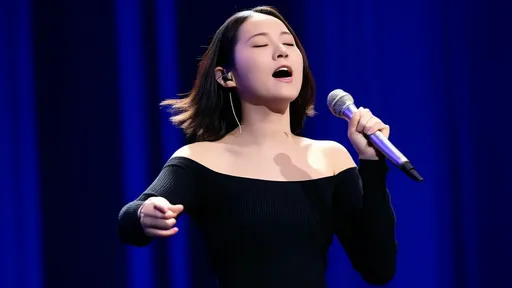
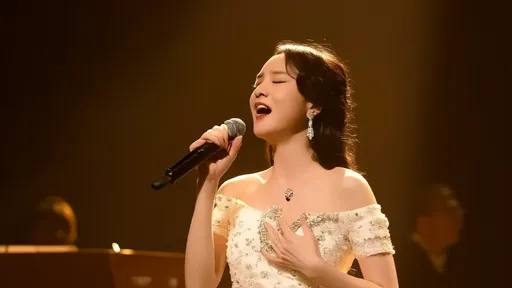
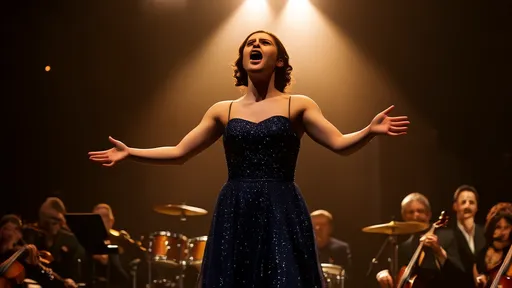
The stage lights dim, a hush falls over the audience, and then—it happens. A single note, raw and unfiltered, cuts through the silence like a knife. This is the moment when a musical theater performer transcends mere singing and taps into something deeper, something primal. Emotional eruption in musical theater isn’t just about hitting the right notes; it’s about tearing open a vein and letting the character’s soul bleed into the song. The greatest performers don’t just sing—they combust.
What separates a technically proficient performance from one that leaves audiences breathless is the ability to harness emotional volatility without losing control. Think of Patti LuPone’s volcanic rendition of "Rose’s Turn" in Gypsy, or Michael Crawford’s shattered, whispered agony in "The Music of the Night." These aren’t performances—they’re exorcisms. The secret lies in the paradox of precision and abandon. The performer must have absolute technical mastery to avoid vocal damage, yet appear utterly unrestrained, as if the emotion might shatter them at any moment.
The body becomes an instrument of tension and release. Watch any great musical theater actor mid-ballad—their hands tremble not because they’re instructed to, but because the emotion demands it. The jaw quivers, the breath becomes visible, the eyes focus on some distant point only they can see. These physiological responses can’t be faked; they emerge when the performer stops acting and starts being. Audiences recognize the difference viscerally—we lean forward when a performer crosses this threshold, our own breath catching in sympathy.
Vocal technique serves as the safety net for emotional freefall. Legit-trained singers often struggle with musical theater’s emotional demands because classical purity can feel at odds with sobbing through a phrase or cracking a note intentionally. The breakthrough comes when they realize that ugliness has its own authenticity. Jonathan Larson’s Rent forced an entire generation of performers to embrace vocal fry, gasps, and even screams as valid emotional tools. The score for Next to Normal includes notation for when Alice Ripley was to sing through actual tears—the sound of a voice breaking under grief’s weight.
Curiously, the most explosive moments often live in restraint. Consider Judy Garland’s haunting performance of "Over the Rainbow" where the chorus’s simplicity makes the emotional undercurrent devastating. Or Lin-Manuel Miranda’s decision to have the climactic moment in Hamilton’s "It’s Quiet Uptown" delivered almost spoken, the melody disintegrating into pure ache. The audience’s imagination will always outpace what can be shown—sometimes the most powerful eruption is the one that barely surfaces.
The relationship between actor and audience during these moments becomes almost alchemical. There’s a shared understanding that we’re witnessing something dangerous—an emotional truth too raw for daylight. When Cynthia Erivo tore through "I’m Here" in The Color Purple, something extraordinary happened: the applause didn’t begin when she finished. The theater erupted mid-note, as if the collective audience couldn’t contain their response a moment longer. That’s the litmus test—when emotion transcends performance and becomes communal catharsis.
Modern musical theater increasingly demands this emotional athleticism from performers. Shows like Dear Evan Hansen and Fun Home require actors to oscillate between conversational intimacy and operatic despair within measures. The new generation of performers—many raised on the confessional authenticity of singer-songwriters rather than Broadway belters—are redefining what emotional truth sounds like. The vibrato-less straight tone of Ben Platt’s "Words Fail" conveys panic more effectively than any high C ever could.
Yet for all the talk of technique, the ineffable quality that makes one performer’s outburst shatter an audience while another’s leaves them cold remains mysterious. It’s the difference between watching someone cry and feeling your own throat tighten in response. Perhaps this alchemy explains why we return to musical theater—not to hear perfect notes, but to witness human beings walking the tightrope between control and abandon, giving us permission to feel what they feel. In an increasingly mediated world, that shared eruption of unfiltered emotion may be musical theater’s most necessary magic.
By /Aug 13, 2025
By /Aug 13, 2025

By /Aug 13, 2025
By /Aug 13, 2025

By /Aug 13, 2025

By /Aug 13, 2025
By /Aug 13, 2025
By /Aug 13, 2025
By /Aug 13, 2025
By /Aug 13, 2025

By /Aug 13, 2025

By /Aug 13, 2025
By /Aug 13, 2025
By /Aug 13, 2025
By /Aug 13, 2025
By /Aug 13, 2025
By /Aug 13, 2025
By /Aug 13, 2025

By /Aug 13, 2025

By /Aug 13, 2025
