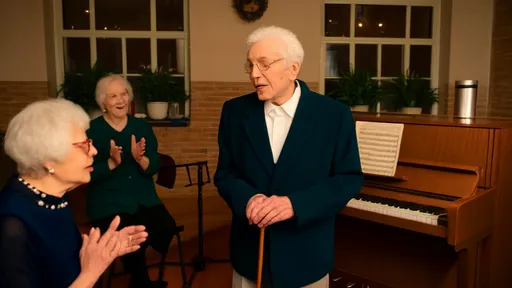
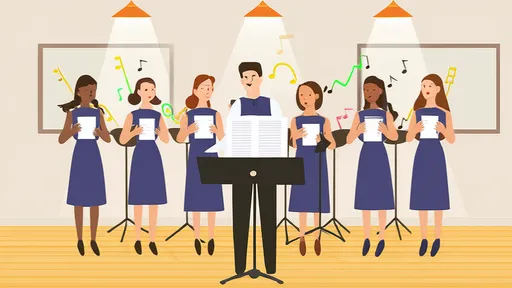
As the golden years unfold, many find solace and joy in the communal experience of singing. Senior choirs, in particular, have become a sanctuary for those who wish to keep their voices alive and vibrant. The concept of "vocal preservation" or "voice preservation" has gained traction among aging singers, who are eager to maintain the richness and clarity of their tones well into their later years. This practice is not merely about hitting the right notes; it’s a holistic approach that blends technique, health, and passion.
The journey of a senior choir member is often marked by a deep appreciation for music’s timeless quality. Unlike younger singers, older vocalists bring a wealth of life experience to their performances, infusing each note with emotional depth. However, the aging process can introduce challenges such as reduced lung capacity, vocal cord stiffness, and diminished pitch accuracy. These hurdles, while significant, are not insurmountable. With the right methods, senior singers can continue to produce sounds that are both powerful and poignant.
Breath control stands as the cornerstone of vocal preservation. Many choir directors emphasize diaphragmatic breathing, a technique that allows singers to maximize airflow without straining their vocal cords. This method is particularly beneficial for seniors, as it compensates for the natural decline in respiratory efficiency. By focusing on deep, controlled breaths, older singers can sustain longer phrases and project their voices with greater ease. Workshops dedicated to breath management have become a staple in senior choirs, often incorporating gentle yoga or tai chi exercises to enhance lung function.
Equally important is the concept of vocal hydration. Aging vocal cords are more prone to dryness, which can lead to cracking or hoarseness. Seasoned choir members swear by remedies as simple as warm herbal teas or as specialized as steam inhalation with essential oils like eucalyptus or peppermint. Some choirs even schedule "hydration breaks" during rehearsals, encouraging singers to sip water infused with honey or lemon—a nod to traditional soothing practices that have stood the test of time.
The repertoire selection plays a subtle yet pivotal role in voice preservation. Unlike the demanding arias of youth, senior choirs often gravitate toward pieces that honor their vocal maturity while avoiding excessive strain. Spirituals, folk songs, and classic standards from the mid-20th century are perennial favorites, offering emotional resonance without overtaxing the voice. Arrangers frequently adapt these pieces to sit comfortably in the choir’s collective range, sometimes transposing keys or simplifying harmonies to ensure accessibility.
Community, perhaps unexpectedly, emerges as a critical factor in vocal longevity. The psychological benefits of singing in a group—reduced stress, increased oxytocin levels, and a sense of belonging—directly impact vocal quality. When singers feel supported and valued, their voices naturally reflect that confidence. Many senior choirs incorporate social rituals like post-rehearsal tea gatherings or annual retreats, fostering bonds that translate into musical cohesion. The shared laughter and occasional tears during these gatherings seem to lubricate the vocal cords as effectively as any technical exercise.
Technology, too, has found its place in the world of senior vocal preservation. Portable humidifiers, voice analysis apps, and even specialized microphones help older singers monitor and enhance their output. Some forward-thinking choirs employ subtle amplification during performances, not as a crutch but as a tool to balance voices that might otherwise be overshadowed by their younger counterparts. These innovations are embraced without shame, viewed simply as another means to honor the music.
The twilight years need not signal the end of beautiful singing. Through mindful techniques, adapted repertoire, and the sustaining power of community, senior choirs worldwide are proving that voices can age like fine wine—gaining complexity and character with each passing year. Their performances stand as living testament to the enduring human spirit, one harmonious phrase at a time.
By /Aug 13, 2025

By /Aug 13, 2025

By /Aug 13, 2025
By /Aug 13, 2025

By /Aug 13, 2025

By /Aug 13, 2025
By /Aug 13, 2025
By /Aug 13, 2025
By /Aug 13, 2025
By /Aug 13, 2025

By /Aug 13, 2025
By /Aug 13, 2025
By /Aug 13, 2025
By /Aug 13, 2025
By /Aug 13, 2025
By /Aug 13, 2025
By /Aug 13, 2025

By /Aug 13, 2025

By /Aug 13, 2025

By /Aug 13, 2025
