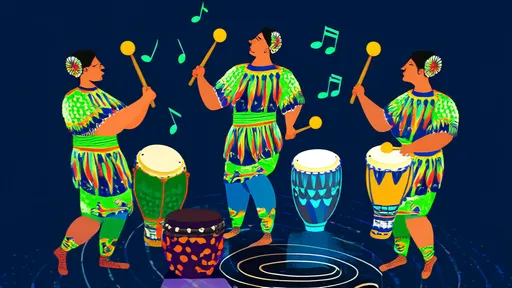
The pulsating heart of Brazil’s Carnival lies in the thunderous, hypnotic rhythms of samba percussion. For outsiders, the wall of sound produced by a bateria—the drumming ensemble at the core of every samba school—can feel overwhelming, even chaotic. But beneath the surface lies a meticulously structured musical language, one that can be decoded through the study of samba rhythm notation. These visual representations of syncopated patterns offer a gateway into understanding how Brazilian percussionists weave together polyrhythms to create that unmistakable samba swing.
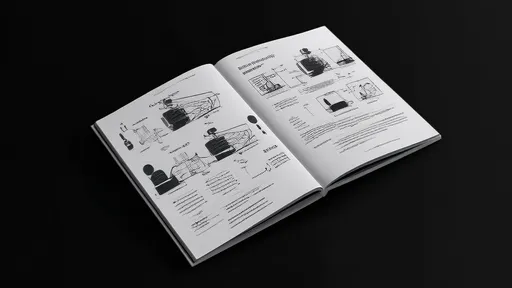
Unlike Western musical notation, which prioritizes melody and harmony, traditional samba rhythm diagrams focus almost entirely on groove and interlocking parts. Each instrument in the bateria has its own role and corresponding notation: the deep surdo marks the heartbeat-like downbeats, the crisp caixa (snare) sprays sixteenth-note flourishes, while the tamborim’s staccato patterns cut through the mix with razor-sharp precision. What looks like abstract dots and lines on paper transforms into a kinetic, full-body experience when played by Rio’s master percussionists.
The origins of these notation systems reveal samba’s oral tradition colliding with modern pedagogy. In favelas and samba schools, rhythms were historically taught through call-and-response, with elders demonstrating patterns that younger players would replicate by ear. But as samba gained international popularity and formal music programs emerged, educators developed visual aids to document these once-improvised patterns. Today’s charts—whether hand-drawn by mestres de bateria or digitally rendered—preserve centuries of Afro-Brazilian musical wisdom while allowing new generations to analyze the architecture of the groove.
Deciphering these diagrams requires understanding Brazil’s unique rhythmic vocabulary. Where a European conductor might count "1-2-3-4," samba musicians feel the clave (though unlike Cuban son, Brazilian clave is often implied rather than played). The notation captures subtle microtiming—those imperceptible delays and anticipations that give samba its characteristic push-pull feel. Symbols indicate whether a repinique drum should strike the head or rim, or when a player should add a virada (a dramatic fill that signals the ensemble to transition sections). These nuances, invisible to the untrained eye, separate mechanical repetition from authentic samba swing.
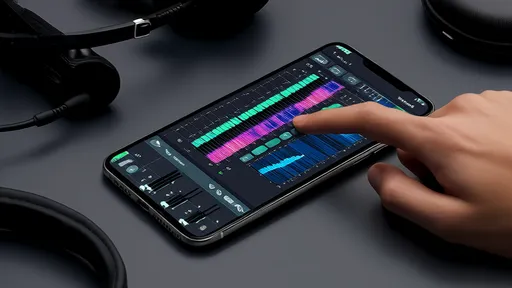
Modern technology has revolutionized how these rhythms are taught and preserved. Apps like Samba Rhythm Lab animate notation in real time, while YouTube tutorials synchronize sheet music with video demonstrations. Yet purists argue that no diagram can fully convey the physicality of samba drumming—the way a surdo player sways with their drum strapped to the body, or how tamborim players achieve blistering speed by rebounding the stick off the drumhead. The heat, sweat, and collective energy of a bateria in motion remain impossible to notate.
For musicians worldwide, studying samba notation has become a rite of passage. Jazz drummers analyze these patterns to expand their rhythmic vocabulary, while marching bands incorporate samba-reggae cadences into halftime shows. Ethnomusicologists pore over century-old manuscripts to trace the evolution of Rio’s signature sound. And every February, when Carnival erupts in a deafening celebration of life, those meticulously notated rhythms—passed down through generations—continue to make millions of hips move in perfect synchrony.
The next time you hear a samba groove, listen beyond the surface. Those interlocking parts—the surdo’s boom, the shaker’s whisper, the repinique’s call—aren’t random chaos. They’re a living, breathing mathematical equation, a cultural code etched into rhythm charts that pulse with the soul of Brazil itself.
By /Aug 13, 2025
By /Aug 13, 2025

By /Aug 13, 2025
By /Aug 13, 2025
By /Aug 13, 2025

By /Aug 13, 2025
By /Aug 13, 2025

By /Aug 13, 2025
By /Aug 13, 2025
By /Aug 13, 2025
By /Aug 13, 2025

By /Aug 13, 2025

By /Aug 13, 2025

By /Aug 13, 2025
By /Aug 13, 2025
By /Aug 13, 2025
By /Aug 13, 2025

By /Aug 13, 2025
By /Aug 13, 2025

By /Aug 13, 2025
