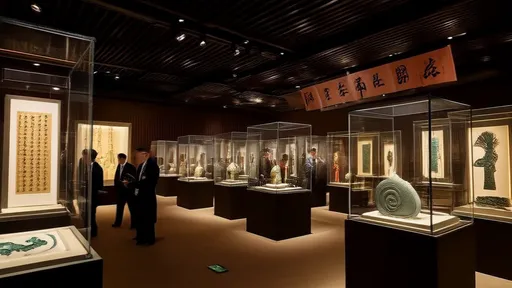
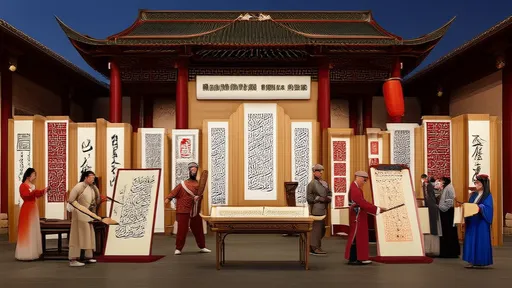
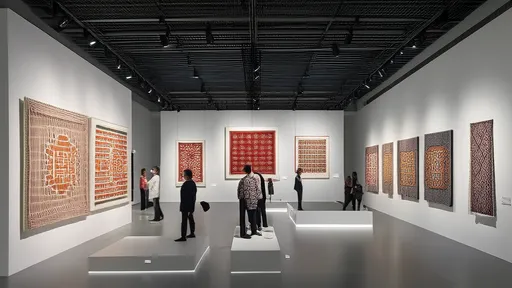
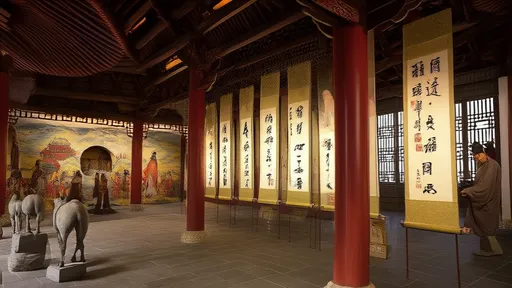
The desert winds of Dunhuang carried a new cultural resonance this season as the annual Dunhuang Cultural Expo unveiled its latest treasure: the "Endless Green Mountains Journey” calligraphy and painting exhibition. This meticulously curated showcase does not merely display art; it unfurls a vast, silent narrative of the Silk Road, inviting visitors on a visual pilgrimage along the ancient trade routes that once connected the East and West. Against the backdrop of the Mogao Caves, a UNESCO World Heritage site often called a "library in the desert," the exhibition serves as a contemporary echo of millennia of cultural exchange, proving that the stories of the Silk Road are far from finished.
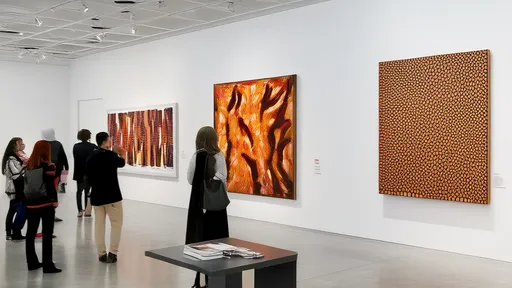
The title itself, "Endless Green Mountains Journey," is a poetic invocation drawn from classical Chinese literature, suggesting an everlasting voyage through both physical and cultural landscapes. It perfectly captures the spirit of the exhibition, which moves beyond the common imagery of camels and sand dunes to explore the profound connections fostered by the Silk Road. The artworks on display, created by a diverse group of established and emerging artists from China and other Silk Road nations, traverse a wide emotional and stylistic spectrum. From sweeping ink-wash landscapes that depict the formidable yet beautiful mountain passes traversed by merchants, to intricate portraits of the diverse peoples who inhabited the route, each piece contributes a unique voice to a grand, harmonious chorus.
One of the most striking sections of the exhibition is dedicated to reinterpreting the aesthetic legacy found within the Dunhuang grottoes. Artists have drawn direct inspiration from the famed flying apsaras, the vibrant murals depicting Buddhist parables, and the rich palette of colours that have survived for centuries. However, these are not simple copies. Instead, we see a dynamic dialogue between past and present. A contemporary painting might render a celestial being with abstract, modern forms, while another uses traditional gongbi techniques to detail a scene of cultural confluence in a ancient market city, breathing new life into ancient themes. This section powerfully demonstrates how the artistic DNA of the Silk Road continues to mutate and adapt, remaining vitally relevant.
Beyond visual beauty, the exhibition functions as a profound historical discourse. A series of linked artworks traces the journey of specific commodities—not just silk, but also porcelain, spices, and paper—highlighting how their eastward and westward flow altered societies. A powerful triptych, for instance, might illustrate the transformation of glassmaking techniques from Mesopotamia to China, showcasing the silent technological transfer that occurred alongside trade. Another compelling segment focuses on the movement of ideas, particularly the spread of Buddhism from India through Central Asia to China, Korea, and Japan. The artworks here are contemplative, often using symbolic imagery rather than literal representation to convey the deep, spiritual impact of this exchange.
The human element is the undeniable heart of the "Endless Green Mountains Journey". The curators have masterfully included works that zoom in on the individuals who populated the Silk Road: the Sogdian merchant negotiating in a Chang'an market, the Uighur musician introducing a new lute to a Tang dynasty court, the Tibetan monk meticulously translating sutras. These are not anonymous figures but characters imbued with personality and purpose. Through sensitive portraiture and evocative scene-setting, the exhibition reminds us that history is made by people. It emphasizes the friendships, the shared hardships, the moments of understanding and misunderstanding that defined these cross-cultural encounters, making the ancient world feel immediate and deeply human.
In the context of the Dunhuang Cultural Expo, this exhibition takes on a greater significance. The Expo itself is a modern embodiment of the Silk Road spirit, a platform for international cultural dialogue. The "Endless Green Mountains Journey" exhibition acts as its centerpiece, providing the historical and emotional depth that underpins the Expo's contemporary mission. It argues convincingly that the Belt and Road Initiative of today is not a novel creation but a revival of an ancient, deeply ingrained pattern of connectivity. The art becomes a bridge, linking the ambitious projects of the present with the enduring legacy of the past, suggesting that we are still writing new chapters in this ongoing story.
As visitors move through the gallery, the cumulative effect is one of awe and reflection. The exhibition does not shy away from the hardships of the journey—the isolation, the perilous terrain, the cultural barriers—yet the overarching tone is one of hope and connection. It portrays the Silk Road not as a line on a map, but as a living, breathing network of human resilience and curiosity. The final pieces in the collection are often the most forward-looking, featuring abstract representations of digital networks, modern infrastructure, and global citizens, posing the question: what does the Silk Road look like in the 21st century?
The "Endless Green Mountains Journey" exhibition is more than a display of artistic skill; it is a profound cultural statement. It successfully translates the epic, millennia-spanning saga of the Silk Road into a powerful visual language that resonates with a modern audience. By the time one exits the gallery, the title's meaning has deepened. The "green mountains" are no longer just geographical features but symbols of the enduring human spirit, the boundless landscapes of culture, and the endless journey toward mutual understanding. It stands as a testament to the power of art to illuminate history and inspire a future built on the same principles of exchange and cooperation that once made the Silk Road the greatest highway of civilization.
By /Sep 25, 2025
By /Sep 25, 2025
By /Sep 25, 2025
By /Sep 25, 2025
By /Sep 25, 2025
By /Sep 25, 2025
By /Sep 25, 2025
By /Sep 25, 2025
By /Sep 25, 2025
By /Sep 25, 2025
By /Sep 25, 2025
By /Sep 25, 2025
By /Sep 25, 2025
By /Sep 25, 2025
By /Sep 25, 2025
By /Sep 25, 2025
By /Sep 25, 2025
By /Sep 25, 2025
By /Sep 25, 2025
By /Sep 25, 2025
