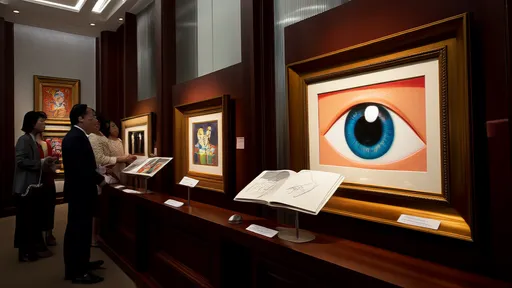
Hong Kong’s autumn auction season ignites with a spectacular offering from Sotheby’s, where masterpieces spanning centuries and continents are poised to captivate collectors worldwide. The spotlight falls on an exceptional juxtaposition of artistic genius: a powerful, early 20th-century canvas by Pablo Picasso and a deeply evocative contemporary sculpture by Yoshitomo Nara. This curated selection, headlined by Picasso's Buste d'homme (Half-Length Portrait of a Man) and Nara's Can't Wait 'til the Night Comes, promises not only to drive fierce bidding but also to narrate a compelling story about the enduring and evolving language of portraiture and human emotion in art.
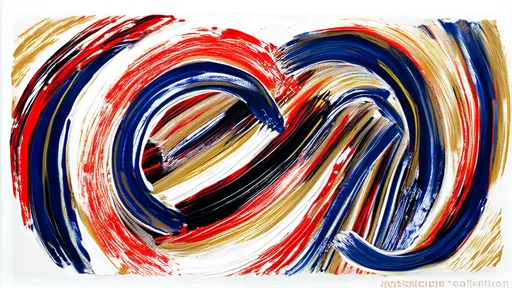
The star of the modern art contingent is undoubtedly Pablo Picasso’s Buste d'homme, a striking work created in 1969. This painting is a formidable example from the final, explosively creative chapter of the artist's life. The canvas is dominated by the visage of a musketeer, a recurring archetype in Picasso's late work that he imbued with a sense of theatricality, virility, and self-reflection. The man's face is a cartography of bold, sweeping brushstrokes, rendered in a palette of vibrant greens, blues, and ochers that clash and harmonize with equal intensity. His eyes, one sharply defined and the other a mere suggestion, seem to hold a universe of experience—defiant, melancholic, and fiercely alive.
Art historians often view these late works as Picasso’s final dialogue with the Old Masters, particularly Rembrandt and Velázquez, whom he revered. The musketeer, with his ruffled collar and confident gaze, is a direct nod to the 17th-century Dutch and Spanish portraiture tradition. However, Picasso subverts this tradition with his raw, almost violent, application of paint and his radical distortion of form. This is not a polite homage; it is a conquest. The painting pulsates with the energy of an artist who, even in his eighth decade, refused to be constrained by convention, instead pushing the boundaries of expressionism to their absolute limit. Its appearance at auction is a rare event, offering collectors a chance to acquire a monumental work from the very pinnacle of Picasso's prolific career.
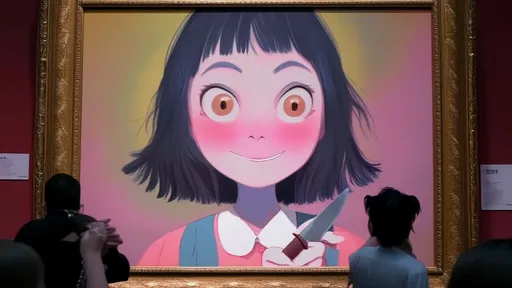
In stark contrast, yet in profound conversation with the Picasso, is Yoshitomo Nara’s enchanting and unsettling sculpture, Can't Wait 'til the Night Comes from 2012. The piece features one of Nara’s signature characters: a large-headed, wide-eyed child rendered in fibreglass. This particular figure sits, clutching a tiny knife, its expression a complex blend of innocence, defiance, and loneliness. The title suggests a state of anticipation, perhaps for the freedom and solitude that darkness brings. The work is a masterpiece of contemporary sculpture, encapsulating the aesthetic of Japanese Pop and the deeper psychological undercurrents that define Nara’s global appeal.
Nara’s work resonates deeply with a generation raised on manga and anime, yet its emotional core is timeless. The solitary child is a vessel for universal feelings of alienation, rebellion, and the quiet resilience of the inner self. The inclusion of the knife, a symbol that recurs in his oeuvre, adds a layer of ambiguous tension. It could be interpreted as a tool of defense, a symbol of inner turmoil, or simply a child’s imaginary prop. This ambiguity is central to Nara’s power, allowing viewers to project their own memories and emotions onto the figure. Can't Wait 'til the Night Comes is more than a collectible; it is a cultural icon of early 21st-century sentiment.
The decision by Sotheby’s to present these two works within the same auction framework is a masterstroke of curation. It creates a dynamic dialogue across a chasm of nearly half a century. Both Picasso and Nara are, at their essence, portraitists of the human condition. Picasso’s musketeer externalizes emotion through a torrent of gestural paint, a public performance of identity rooted in art historical precedent. Nara’s child, conversely, internalizes its feelings, its cartoon-like simplicity belying a profound psychological depth that speaks to the anxieties and isolation of modern life. One is a roar; the other is a whisper. Yet both possess an undeniable, almost confrontational, presence that commands the viewer’s attention and refuses to let go.
This auction also underscores Hong Kong’s cemented role as the undisputed hub of the global art market, a neutral ground where Eastern and Western masterpieces converge. The city’s unique position allows for a collecting base that appreciates the nuances of both Picasso’s established Western canon and Nara’s influential contemporary voice from Asia. The presence of such blue-chip modern art alongside top-tier contemporary works from Asia reflects a mature and sophisticated market that values artistic merit over geographic origin. The success of these lots will be closely watched as a barometer for global art market health and the continuing appetite for high-value assets.
Beyond the two headliners, the Sotheby’s sale is bolstered by a carefully selected array of works that complement the central theme. Expect strong interest in other post-war European masters, as well as contemporary Asian artists who share Nara’s introspective and culturally hybrid approach. The auction house has built a reputation for creating thematic sales that tell a story, and this season is no exception. The narrative here is one of artistic courage—the courage to distort form, as Picasso did, and the courage to explore the vulnerability of childhood, as Nara does. It is a testament to the power of art to express the inexpressible, regardless of era or style.
As the gavel prepares to fall, the art world holds its breath. The competition for Buste d'homme is expected to be fierce, likely drawing bids from international museums and private collectors seeking a definitive late Picasso. Similarly, Can't Wait 'til the Night Comes will attract a different, though equally passionate, cohort of collectors for whom Nara’s work represents a pivotal moment in contemporary art. The outcome will not only set price records but will also reaffirm the timeless appeal of art that dares to probe the depths of human emotion. This sale is not merely a transaction; it is a celebration of two visionaries whose work, in its own unique way, holds up a mirror to the soul.

By /Sep 25, 2025

By /Sep 25, 2025
By /Sep 25, 2025
By /Sep 25, 2025
By /Sep 25, 2025
By /Sep 25, 2025
By /Sep 25, 2025
By /Sep 25, 2025

By /Sep 25, 2025

By /Sep 25, 2025
By /Sep 25, 2025
By /Sep 25, 2025
By /Sep 25, 2025
By /Sep 25, 2025

By /Sep 25, 2025
By /Sep 25, 2025
By /Sep 25, 2025

By /Sep 25, 2025
By /Sep 25, 2025

By /Sep 25, 2025
