In the heart of Accra, where the humid air carries the scent of the sea and history, the work of Ghanaian artist Ibrahim Mahama unfolds like a vast, tactile poem. His monumental installations, predominantly crafted from thousands of stitched-together jute sacks, are more than just artistic spectacles; they are profound meditations on labor, value, and the lingering ghosts of colonial trade routes. Mahama does not simply use these coarse, often stained bags as a material; he collaborates with their history, allowing their scars and smells to narrate a story far grander than any single artwork could contain.
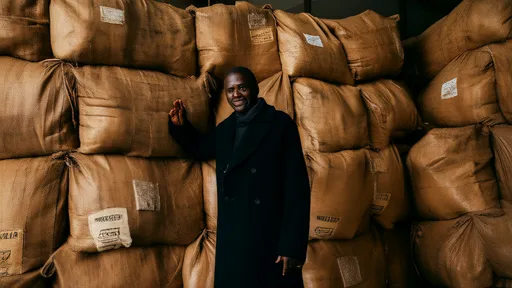
The jute sack, or coal sack as it is commonly known in Ghana, is an object deeply embedded in the nation's economic and social fabric. These sacks are the workhorses of the agricultural and mining sectors, used to transport cocoa, coffee, grains, and coal from the fertile fields and rich mines of Ghana's interior to ports for export across the globe. They are ubiquitous, disposable, and silent witnesses to the cycles of production and consumption. Mahama’s genius lies in his recognition of this mundane object as a potent symbol. By collecting these used sacks—each one marked with logos, identification numbers, and the grime of its journey—he gathers the physical evidence of a system whose roots stretch back into the colonial era.
The very essence of Mahama's practice is an act of reclamation. He sources the sacks directly from markets, ports, and railway stations, often engaging in lengthy negotiations with the merchants and laborers who use them. This process is integral to the work, connecting the art to the real-world economies and people it represents. The sacks bear the imprints of countless hands—the farmers who harvested the contents, the laborers who heaved them onto trucks, the traders who brokered their sale. In stitching them together into immense, draping canvases, Mahama weaves these individual stories into a collective narrative. The resulting textiles are heavy, not just with physical weight, but with the weight of history and human effort.
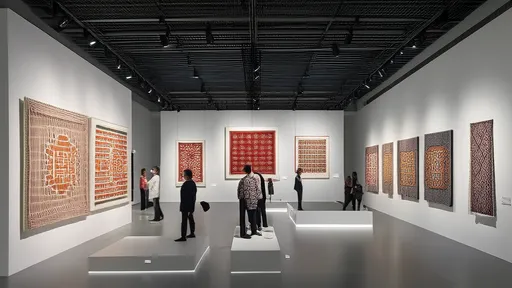
When installed, these jute tapestries achieve a transformative power. Mahama has draped them over iconic public buildings in Ghana, such as the old Parliament House in Accra, and on an even grander scale, over major international institutions like the Barbican Centre in London or the Palais de Tokyo in Paris. This act of wrapping is deeply symbolic. It simultaneously conceals and reveals. It masks the neoclassical facades of buildings that often symbolize state power and colonial legacy, replacing their clean, ordered lines with a chaotic, frayed, and deeply textured skin. The building, once a symbol of imposed order, becomes a monument to the messy, arduous, and often overlooked processes that underpin the global economy.
This gesture forces a direct confrontation with history. The colonial project in West Africa was, at its core, an extractive enterprise designed to funnel raw materials like cocoa, gold, and rubber to European industries. The infrastructure built—the railways, the ports, the administrative buildings—served this purpose. By enveloping these very structures with the sacks used to carry those raw materials, Mahama creates a powerful visual metaphor. He makes visible the invisible supply chains and the labor that was exploited to build wealth elsewhere. The sacks become a ghostly shroud, a memory of the commodities that passed through, and the people who moved them. It is a form of historical redress, using the tools of the trade itself to critique the trade's legacy.
Furthermore, the materiality of the jute sacks speaks volumes. They are rough, imperfect, and biodegradable. They contrast sharply with the sterile, permanent materials of contemporary art galleries and modern architecture. This contrast challenges conventional notions of value and beauty. In the art world, where value is often dictated by rarity and permanence, Mahama elevates a mass-produced, ephemeral object. He finds profound aesthetic and conceptual value in the marks of use: the stains, the tears, the repaired holes. These imperfections are not flaws; they are records. They tell of overloading, of long journeys on bumpy roads, of being stored in damp warehouses. They are the biography of the object, and by extension, a biography of the labor it represents.
The scale of Mahama's installations is deliberately overwhelming. To stand before a wall covered in hundreds of these stitched sacks is to be engulfed by their presence. The smell of cocoa, coal, and sweat can be palpable, creating an immersive, multi-sensory experience that transcends the visual. This scale mirrors the immense scale of global trade itself—a system so vast it becomes abstract. Mahama makes it tangible. He gives this abstract system a body, a texture, and an odor. The viewer is not allowed the comfortable distance of a disinterested observer; they are drawn into the physical reality of the work, prompting a more visceral and empathetic engagement with its themes.
Ultimately, Mahama's work is not a nostalgic look backward but a urgent commentary on the present. The patterns of trade established during the colonial era have not disappeared; they have evolved. Ghana remains a major exporter of raw materials, while often importing finished goods made from those same materials. The jute sacks, many of which are now produced in South Asia, continue their journeys, embodying a new, globalized phase of the same economic relationships. Mahama’s art highlights the continuities between colonial exploitation and contemporary global capitalism. It asks pressing questions about who benefits from these systems and who bears the cost.
By giving voice to a silent, disposable object, Ibrahim Mahama performs a remarkable act of historical and artistic archaeology. His jute sack installations are not just covers for buildings; they are uncoverings of hidden truths. They remind us that the wealth of nations is built on the backs of laborers, and that the flow of commodities is etched with stories of endurance and survival. In transforming the humble coal sack into a medium of monumental beauty and critical power, Mahama challenges us to look more closely at the world around us, to see the history embedded in the everyday, and to reconsider the true cost of the things we often take for granted.
By /Sep 25, 2025

By /Sep 25, 2025
By /Sep 25, 2025

By /Sep 25, 2025

By /Sep 25, 2025
By /Sep 25, 2025

By /Sep 25, 2025
By /Sep 25, 2025

By /Sep 25, 2025
By /Sep 25, 2025
By /Sep 25, 2025

By /Sep 25, 2025

By /Sep 25, 2025

By /Sep 25, 2025

By /Sep 25, 2025
By /Sep 25, 2025
By /Sep 25, 2025
By /Sep 25, 2025

By /Sep 25, 2025
By /Sep 25, 2025
