The art world is abuzz with a significant moment for postwar American sculpture, as a major work by Ruth Asawa is poised to make its Hong Kong auction debut. This event coincides with the highly anticipated retrospective, "Ruth Asawa: Through Line," scheduled to open at The Museum of Modern Art in New York. This dual spotlight, bridging the commercial energy of Asia's burgeoning art market and the scholarly prestige of a MoMA exhibition, marks a pivotal point in the recognition of an artist whose delicate, biomorphic wire forms have long captivated those who know them, yet are only now receiving widespread, mainstream acclaim.
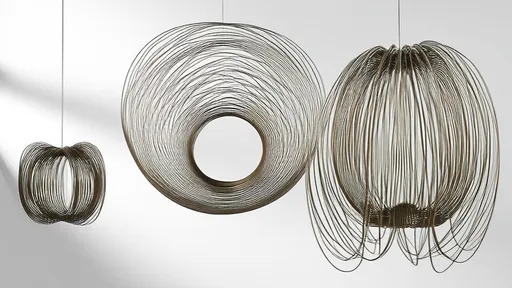
Asawa, a Japanese-American artist who passed away in 2013, created a body of work that is at once ethereal and robust, intricate and expansive. Her signature hanging wire sculptures, constructed using a technique she learned from artisans in Toluca, Mexico, are not solid objects but rather intricate, transparent volumes built from continuous, looping lines of iron, copper, or brass wire. These works, which seem to float in space, capture light and cast complex shadows, transforming the space they inhabit. They are often described as drawing in space, a testament to her foundational training at the experimental Black Mountain College under giants like Josef Albers and Buckminster Fuller.
The sculpture heading to auction is a quintessential example of her work from the 1950s or 60s, a period when she perfected her technique. It is expected to command a substantial price, reflecting not only the quality of the piece but also the growing appetite among Asian collectors for historically significant Western art. The Hong Kong sale represents a strategic move, tapping into a market that has shown increasing sophistication and a desire to build encyclopedic collections. The presence of an Asawa in this context signals a maturation of taste, moving beyond blue-chip Impressionist and Modern paintings to embrace the nuances of postwar American abstraction.
This commercial interest is powerfully validated by the upcoming MoMA retrospective. "Ruth Asawa: Through Line" is not merely an exhibition; it is a canonizing event. The show aims to trace the development of her artistic language from her earliest drawings to her late public commissions, with a particular focus on her enduring fascination with the line. For MoMA to dedicate such a comprehensive survey to Asawa places her firmly within the central narrative of 20th-century art, a position that some critics and historians argue was long overdue. Her work, often marginalized in the past due to her gender, her ethnicity, and the perceived "craft-like" nature of her medium, is now being celebrated for its radical innovation and profound beauty.
The timing of these two events is hardly coincidental. They represent a powerful feedback loop between the market and the museum. The auction generates headlines and financial validation, creating a buzz that draws a broader audience to the museum exhibition. Conversely, the scholarly rigor and public platform provided by MoMA confer a level of legitimacy and art-historical importance that, in turn, solidifies and enhances the market value of her work. This synergy ensures that Asawa's name will be discussed not just in specialized art circles but in the wider cultural conversation.
Understanding Asawa's legacy requires looking beyond the mesmerizing sculptures themselves. Her life story is one of resilience and dedication. During World War II, her family was interned in camps, an experience that undoubtedly shaped her worldview but did not harden her spirit. Later, as a mother of six and a passionate advocate for arts education, she co-founded the Alvarado School Arts Workshop in San Francisco, believing deeply that art was essential for every child's development. This commitment to community and education adds a rich layer of meaning to her artistic practice, framing it as an act of generosity and hope.
The rediscovery and reappraisal of female artists of the 20th century have been one of the most significant trends in the art world over the past decade. Asawa is a prime beneficiary of this shift. For years, her work was admired but somewhat ghettoized, often discussed in contexts of craft or California art. Now, she is being rightly positioned as a peer to other great sculptors of her time, such as Eva Hesse and Louise Nevelson. Her exploration of interior and exterior space, of transparency and form, speaks directly to central concerns of modernist sculpture.
For collectors and institutions in Asia, this moment offers a chance to acquire a piece of this newly clarified history. The acquisition of an Asawa is no longer just an aesthetic choice; it is a statement of curatorial foresight. It demonstrates an engagement with the evolving story of art history, an understanding that value is not static but is continually being re-evaluated. The Hong Kong auction will be closely watched as a barometer of Asawa's appeal in the region and a test of how deeply the narratives championed by Western institutions like MoMA resonate with a global collecting base.
Ultimately, the convergence of the Hong Kong auction and the MoMA retrospective signifies a belated but full-throated celebration of Ruth Asawa's unique vision. Her sculptures, which seem to defy gravity and materiality, have waited patiently for the world to catch up to their quiet brilliance. Now, as they dangle in the rarefied air of auction houses and the hallowed halls of one of the world's great museums, they finally occupy the central place they have always deserved. This is more than a market moment or a museum show; it is the culmination of a long journey toward recognition for an artist who transformed wire into poetry and whose line, indeed, runs straight through the heart of modern art.
By /Sep 25, 2025

By /Sep 25, 2025
By /Sep 25, 2025
By /Sep 25, 2025
By /Sep 25, 2025
By /Sep 25, 2025

By /Sep 25, 2025
By /Sep 25, 2025
By /Sep 25, 2025
By /Sep 25, 2025
By /Sep 25, 2025
By /Sep 25, 2025
By /Sep 25, 2025
By /Sep 25, 2025

By /Sep 25, 2025
By /Sep 25, 2025
By /Sep 25, 2025
By /Sep 25, 2025
By /Sep 25, 2025
By /Sep 25, 2025
