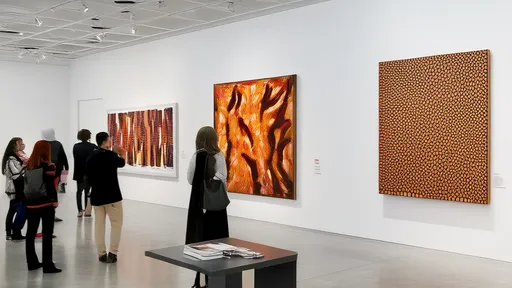
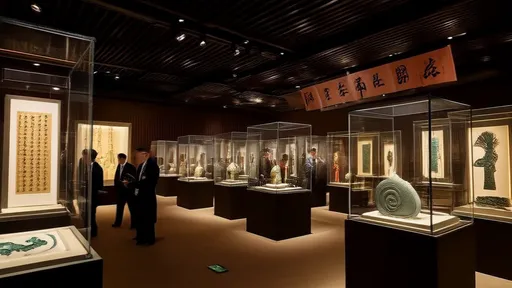
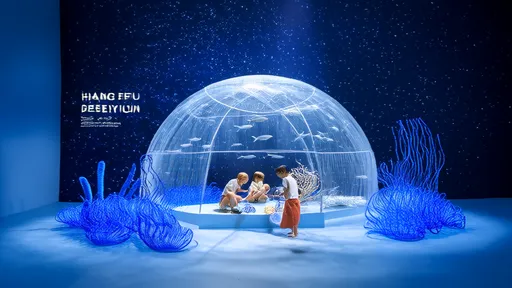
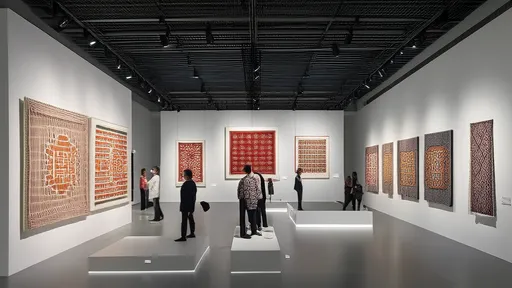
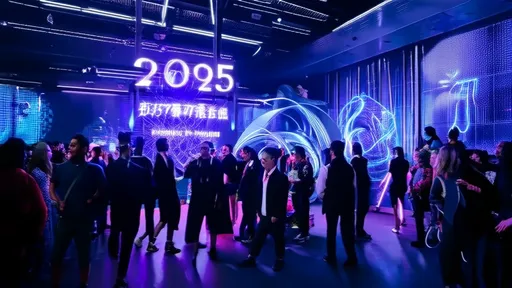
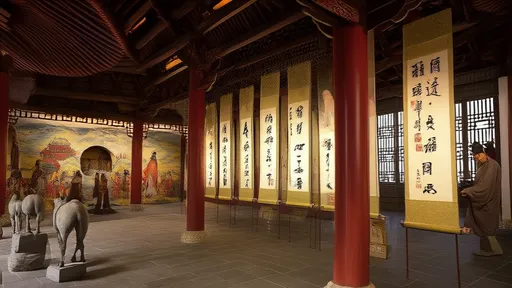
The fifth edition of the Hangzhou Triennial of Fiber Art opened its doors to the public this week, transforming the hallowed halls of the Zhejiang Art Museum into a vibrant tapestry of texture, narrative, and global dialogue. Titled with a deliberate and provocative focus, this year's iteration casts its gaze firmly on the cultural and artistic currents of the Global South, presenting over 70 compelling works that challenge conventional perceptions of fiber art and its place in the contemporary world.
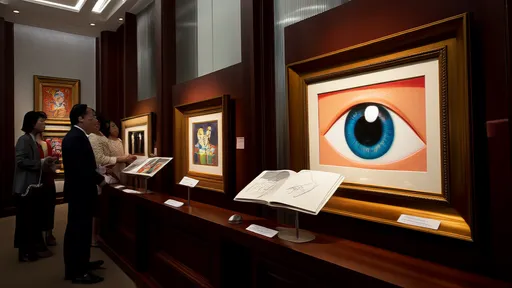
The air in the museum is thick with a palpable sense of discovery. Unlike the sterile white cubes often associated with modern art exhibitions, this triennial feels alive, tactile, and deeply human. The chosen theme is not merely a curatorial trend but a profound statement of intent. It seeks to decentralize the art historical narrative, moving away from Eurocentric perspectives to amplify voices from Latin America, Africa, Asia, and the Middle East. The very materials on display—locally sourced wool, reclaimed fishing nets, hand-spun cotton, plant dyes, and industrial waste—speak a language of place, memory, and resilience that is intrinsically linked to the socio-political realities of these regions.
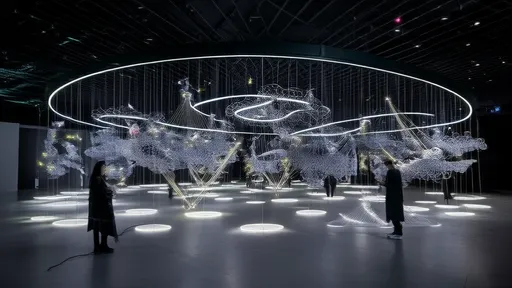
One cannot help but be drawn to the monumental installation by Brazilian artist Maria Thereza Alves. Suspended from the vast ceiling, her work, woven from Amazonian vines and embedded with seeds native to rapidly disappearing rainforests, is both a breathtaking spectacle and a somber ecological elegy. It sways gently, almost breathing, creating an immersive environment that forces viewers to confront the fragility of our natural world. The piece is a powerful testament to how fiber art can transcend decorative function to become a potent vehicle for environmental activism.
From South Africa, Zanele Muholi presents a series of photographic self-portraits where the artist's body is adorned and often obscured by intricate headdresses and garments crafted from black rubber, electrical cables, and domestic objects. These are not portraits in a traditional sense; they are fierce assertions of identity, challenging stereotypes and exploring themes of Blackness, queer visibility, and self-representation. The tactile quality of the materials used in the costumes creates a striking contrast with the photographic medium, blurring the lines between sculpture, performance, and documentation.
The triennial also showcases the deeply rooted textile traditions of Asia, reimagined for a contemporary context. A collective of artisans from India presents a colossal, patchwork tapestry made from fragments of saris worn by women from various communities across the subcontinent. Each swatch of fabric carries its own history, its own story of labor, celebration, and loss. Stitched together, they form a vibrant, chaotic, and beautiful map of collective female experience, a silent yet powerful chronicle of lives lived.
What becomes abundantly clear while navigating the exhibition is the incredible diversity of approaches under the expansive umbrella of "fiber art." It is no longer confined to the loom or the knitting needle. Lebanese artist Mona Hatoum's contribution is a stark, unsettling piece crafted from human hair entangled with fine, almost invisible wire. Lying on the floor like a mysterious, discarded shadow, the work evokes themes of displacement, the body as a site of conflict, and the uncanny presence of the personal in the political. The materiality of hair—intimate, biological, and charged with cultural significance—transforms the work into a deeply visceral encounter.
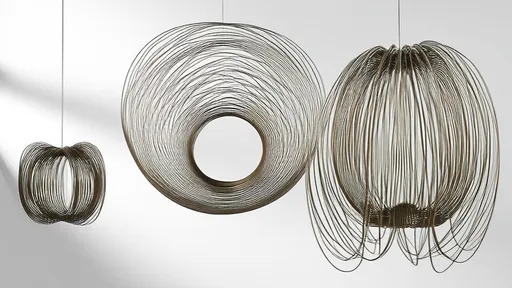
Meanwhile, a young artist from Chile utilizes discarded copper wire, a direct reference to the country's mining industry, to create delicate, lace-like sculptures that mimic colonial-era maps. The work is a brilliant commentary on extraction economies, the rewriting of history, and the hidden labor embedded within global supply chains. The beauty of the form belies a sharp critical edge, demonstrating how artists from the Global South are masterfully using local materials to dissect global issues.
The curatorial framework of the exhibition wisely avoids presenting the Global South as a monolithic entity. Instead, it highlights the intricate connections, shared histories, and distinct particularities that define these vast and varied regions. There is a strong emphasis on process and labor—the slow, meticulous handwork that stands in stark opposition to the speed of digital culture. This focus is a deliberate political act, valuing forms of knowledge and skill that have often been marginalized or deemed "craft" rather than "fine art."
Beyond the aesthetic experience, the triennial has sparked a series of symposiums and workshops, fostering a crucial exchange between artists, scholars, and the public. These discussions delve into the pressing questions the exhibition raises: What does it mean to center the Global South in today's art world? How can traditional techniques inform future artistic practices? And in an age of increasing globalization and homogenization, how can local identities and materials retain their power and specificity?
The 2025 Hangzhou Triennial of Fiber Art is far more than a simple survey of current trends. It is a bold, necessary, and deeply resonant event that successfully repositions fiber art at the forefront of contemporary artistic discourse. By championing the perspectives of the Global South, it offers a richer, more complex, and ultimately more truthful picture of our world. The works on display are not just objects to be admired; they are stories to be heard, histories to be acknowledged, and conversations to be continued long after one leaves the museum. The threads woven here in Hangzhou connect continents, cultures, and concerns, proving that from these humble, tactile materials, some of the most urgent and profound art of our time is being made.
By /Sep 25, 2025

By /Sep 25, 2025
By /Sep 25, 2025
By /Sep 25, 2025
By /Sep 25, 2025
By /Sep 25, 2025
By /Sep 25, 2025
By /Sep 25, 2025

By /Sep 25, 2025
By /Sep 25, 2025
By /Sep 25, 2025
By /Sep 25, 2025
By /Sep 25, 2025
By /Sep 25, 2025
By /Sep 25, 2025
By /Sep 25, 2025
By /Sep 25, 2025
By /Sep 25, 2025
By /Sep 25, 2025
By /Sep 25, 2025
