Hong Kong’s art scene is buzzing with the arrival of one of the most iconic and celebrated works by American Pop artist Tom Wesselmann. Smoker #17, a piece that once shattered auction records for the artist, has made its way to the city, drawing collectors, critics, and enthusiasts into a renewed conversation about Wesselmann’s legacy and the enduring power of Pop Art.
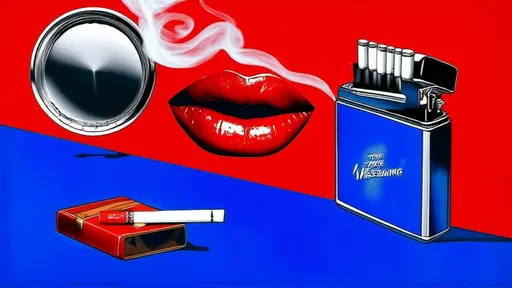
The painting, part of Wesselmann’s acclaimed Smoker series, exemplifies his bold, graphic style and his fascination with consumer culture, eroticism, and the aesthetics of advertising. Created in the 1970s, a period when Wesselmann was at the peak of his artistic powers, Smoker #17 is a large-scale, intensely vibrant work that focuses on the sensual depiction of a woman’s mouth, lips parted, with a cigarette. The composition is both intimate and monumental, reducing the subject to its most provocative elements—lips, smoke, and manicured fingers—against a flat, colorful background. It is a masterclass in simplification and visual impact, echoing the directness of a billboard but with a layered, painterly sophistication.
This particular painting carries significant weight in art market history. In a landmark sale several years ago, Smoker #17 achieved a staggering price at auction, setting a new world record for a work by Tom Wesselmann. This event not only cemented the artwork’s status as a blue-chip masterpiece but also signaled a major reassessment of Wesselmann’s position within the Pop Art canon, often historically dominated by the likes of Warhol and Lichtenstein. The record-breaking sale highlighted a growing appreciation for Wesselmann’s unique contribution—his ability to blend the sensual with the commercial, the abstract with the figurative, in a way that was entirely his own.
Its arrival in Hong Kong is a strategic and symbolic move. The city has firmly established itself as a pivotal hub for the global art market, bridging East and West. Presenting a work of such caliber in Hong Kong underscores the city’s importance to international collectors and institutions. For local audiences, it offers a rare opportunity to engage deeply with a definitive piece of Western Pop Art without traveling to New York or London. The exhibition surrounding Smoker #17 is expected to provide contextual material, including preparatory sketches and related works from the same series, allowing viewers to trace Wesselmann’s artistic process and understand the Smoker paintings within the broader scope of his career.
Wesselmann’s Smoker series, begun in the early 1970s and continuing for over two decades, is often interpreted as a complex commentary on pleasure, vice, and femininity. In an era of growing health consciousness and anti-smoking campaigns, the act of smoking depicted with such lush, seductive beauty creates a potent tension. The series is not a simple glorification but a nuanced exploration of desire and its representation in media. The disembodied lips and swirling smoke become abstract forms, pushing the boundaries between representation and pure painting. This duality is part of what makes Smoker #17 so compelling; it is as much about the formal qualities of color, line, and scale as it is about its subject matter.
The decision to bring this record-holding work to Asia also reflects shifting tides in art collection and appreciation. Asian collectors have shown an increasingly sophisticated and keen interest in post-war and contemporary Western art. The presence of Smoker #17 is a testament to this evolving landscape, aiming to resonate with an audience that appreciates both its art-historical significance and its powerful visual appeal. The painting’s themes, while rooted in a specific American cultural moment, touch on universal notions of glamour, consumption, and sensory experience that transcend geographical boundaries.
For scholars and art lovers, the exhibition is a significant event. It allows for a fresh examination of Wesselmann’s work outside its traditional Western context. How does a Hong Kong audience, with its own unique cultural relationship with smoking, advertising, and depictions of the female form, interpret this work? The dialogue that emerges promises to be rich and multifaceted. Furthermore, seeing the painting in person is a different experience altogether from viewing reproductions. The scale, the texture of the paint, the precise rendering of the glossy lips and the wispy smoke—these are details that command a physical presence and contribute to the work’s overwhelming sensory impact.
In conclusion, the landing of Tom Wesselmann’s Smoker #17 in Hong Kong is more than just a temporary loan of a valuable artwork. It is a cultural event that highlights the city’s status on the world stage, offers a deep dive into a key moment of Pop Art history, and fosters a cross-cultural conversation about art, commerce, and desire. The painting, with its record-setting pedigree and arresting imagery, is sure to leave a lasting impression on all who see it, reaffirming why Wesselmann remains a vital and influential figure in the story of modern art.
By /Sep 25, 2025

By /Sep 25, 2025
By /Sep 25, 2025

By /Sep 25, 2025
By /Sep 25, 2025
By /Sep 25, 2025

By /Sep 25, 2025
By /Sep 25, 2025
By /Sep 25, 2025

By /Sep 25, 2025
By /Sep 25, 2025
By /Sep 25, 2025
By /Sep 25, 2025

By /Sep 25, 2025

By /Sep 25, 2025
By /Sep 25, 2025
By /Sep 25, 2025

By /Sep 25, 2025

By /Sep 25, 2025

By /Sep 25, 2025
