The art world is abuzz with the news that Zao Wou-Ki's monumental masterpiece, 27.01.86, is set to make a spectacular appearance on the auction block. This is not merely the sale of a painting; it is the re-emergence of a legend, a vast canvas that once served as a powerful symbol of international unity and Olympic spirit. The painting, a tempest of color and energy spanning over three and a half meters in width, carries with it a provenance that intertwines the highest echelons of artistic achievement with the global celebration of human potential.
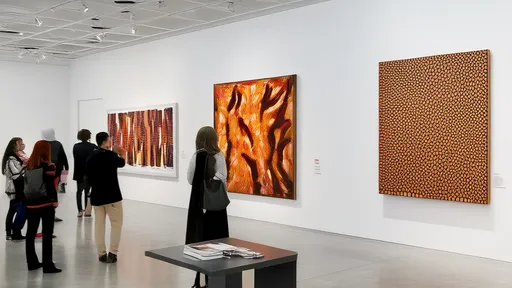
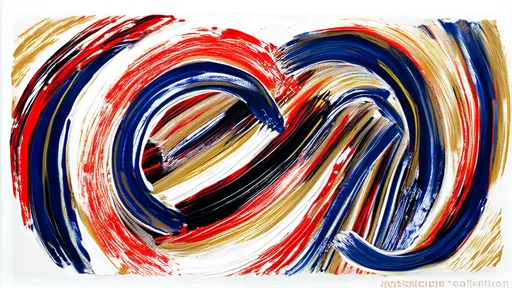
Created in 1986, the work hails from the peak of Zao Wou-Ki's artistic powers, a period where he had fully synthesized his Eastern heritage with the Western abstract expressionist tradition. The title, following his lifelong practice, is simply the date of its completion, a direct and humble marker for a creation of immense complexity. To stand before 27.01.86 is to be engulfed by a universe in formation. Layers of oil paint are applied with both violent gesture and delicate control, suggesting landscapes of the mind where earth, water, sky, and light collide and coalesce. It is an abstract work, yet it pulses with a profound sense of the natural world, a characteristic that made it the perfect ambassador for a theme as universal as the Olympic Games.
The painting's historical significance is profoundly elevated by its role in the 2008 Beijing Olympics. It was selected as the central artistic emblem, the visual cornerstone of the Games' cultural program. This was a choice rich with meaning. Zao Wou-Ki, a Chinese-born artist who found his voice in Paris, embodied the very essence of international dialogue and cultural fusion. His work transcends national boundaries, speaking a visual language of emotion and energy that requires no translation. 27.01.86, with its dynamic composition and vibrant, optimistic palette, became a symbol of the striving spirit, the explosive release of energy, and the harmonious coming together of diverse forces that the Olympics represent. It was more than decoration; it was the soul of the Games made visible.
For years following the Olympics, the painting resided in a prestigious private collection, seen by few outside of its original public display. Its impending auction debut, therefore, is a momentous event. It offers a rare opportunity for a new institution or collector to become the custodian of a piece of art history that is also a piece of sporting and global cultural history. The market for Zao Wou-Ki's work has seen a remarkable ascent over the past decade, with his major canvases from the 1960s through the 1980s consistently achieving record-breaking prices. This particular work, however, possesses a unique dual value: its undeniable artistic mastery is compounded by its iconic public role.
Experts anticipate fierce bidding for 27.01.86. Its scale, quality, and impeccable provenance place it squarely in the category of "trophy lots" that define an auction season. Collectors and museums alike will recognize the chance to acquire not just a beautiful object, but a narrative. The painting tells a story of mid-20th century artistic migration, of the explosive dialogue between Eastern ink-wash traditions and Western oil painting, and of a specific, triumphant moment in the early 21st century when the world's eyes turned to China. It is a work that encapsulates a lifetime of artistic exploration and a singular moment of global celebration.
Beyond the financial figures and market speculation, the sale of this painting invites a deeper reflection on the relationship between art and major world events. In an age where such events are often marked by corporate branding and transient digital imagery, the choice of a profound, contemplative, and physically imposing work of abstract art for the Olympics feels almost radical. It affirmed a belief in the enduring power of painting to communicate complex, humanistic ideals. The resurgence of 27.01.86 asks us to consider what we choose to symbolize our collective aspirations. It reminds us that true symbols are not crafted by committees for instant recognition, but are born from the deep, personal struggles of artists who manage to tap into a universal current.
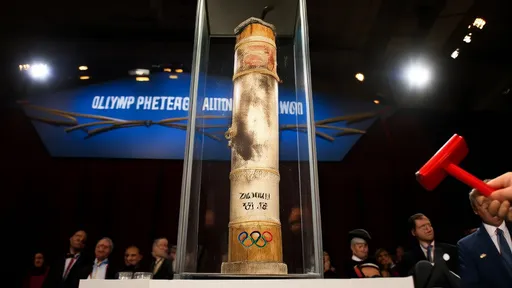
As the gavel prepares to fall, all eyes will be on this magnificent canvas. Whether it finds a new home in a public museum, where it can continue to inspire the public, or in a private collection, its legacy is secure. 27.01.86 is a testament to Zao Wou-Ki's genius, a pivotal work that captures the boundless energy of creation itself. Its journey from the artist's studio to the Olympic stage and now to the auction podium is a compelling chapter in the ongoing story of 20th and 21st-century art, a story where paint, spirit, and history are indelibly intertwined.
By /Sep 25, 2025
By /Sep 25, 2025
By /Sep 25, 2025
By /Sep 25, 2025
By /Sep 25, 2025
By /Sep 25, 2025

By /Sep 25, 2025
By /Sep 25, 2025
By /Sep 25, 2025
By /Sep 25, 2025
By /Sep 25, 2025
By /Sep 25, 2025
By /Sep 25, 2025
By /Sep 25, 2025

By /Sep 25, 2025
By /Sep 25, 2025
By /Sep 25, 2025
By /Sep 25, 2025
By /Sep 25, 2025
By /Sep 25, 2025
