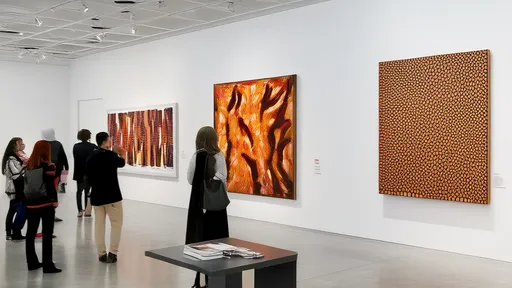
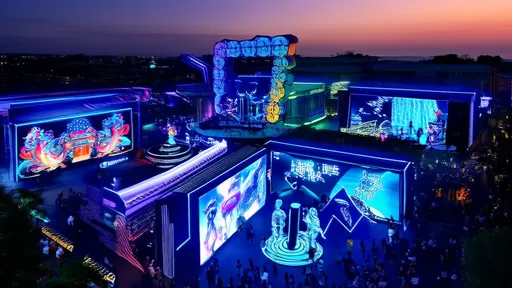
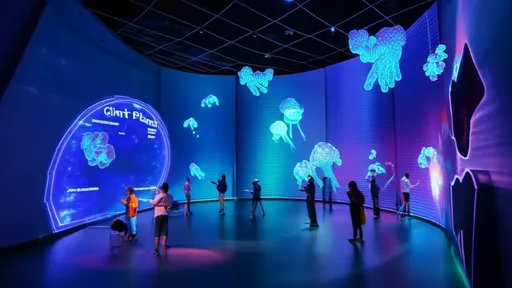
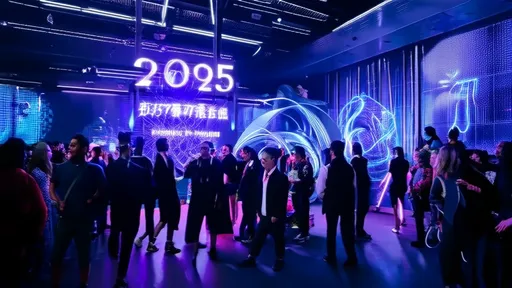
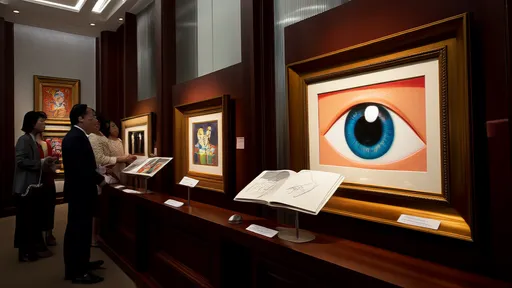
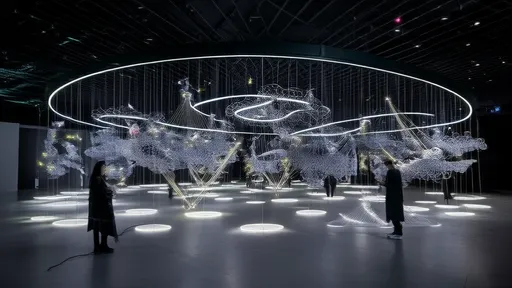
The hushed, reverent atmosphere typical of art galleries was conspicuously absent at the opening of "Giant Planet: Multi-Sensory Art & Technology" in Beijing. In its place was a vibrant hum of excitement, punctuated by gasps of wonder and bursts of laughter, as visitors navigated a labyrinth of experiences designed not just to be seen, but to be felt, heard, and even smelled. This groundbreaking exhibition, housed in a repurposed industrial space in the 798 Art District, boldly declares that the future of artistic expression lies not in a single sense, but in a symphony of them, orchestrated by the latest advancements in artificial intelligence.
The central thesis of "Giant Planet" is the deliberate and sophisticated disruption of traditional sensory hierarchies. For centuries, visual art has prioritized sight above all else. This exhibition, curated by the forward-thinking Lumina Collective, argues that this is an artificial limitation. "We are not merely eyes on stalks," explained lead curator Dr. Anya Sharma during the preview. "Our experience of the world is a complex, simultaneous influx of data from all our senses. Memory is tied to scent, emotion to sound, presence to touch. With technologies like AIGC, we now have the tools to compose for this entire orchestra, not just the string section."
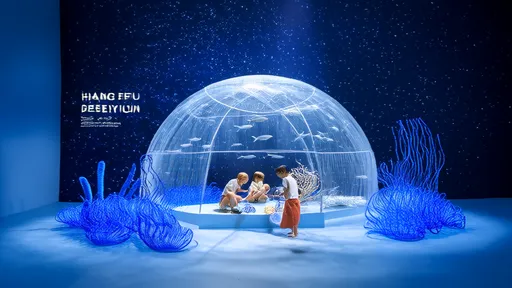
Upon entering, visitors are immediately immersed in this philosophy. The first installation, titled "Chrono-Synesthesia," uses a combination of generative adversarial networks (GANs) and motion-capture technology. As a participant moves through a field of invisible sensors, their gestures and speed are translated in real-time into a sprawling, dynamic visual landscape projected across a 360-degree dome. But the experience doesn't stop there. Simultaneously, an AI composes a unique soundscape based on the movement patterns—slow, flowing motions might generate deep, ambient cello notes, while sharp, quick gestures trigger percussive electronic sounds. The air itself is subtly scented by diffusers, with the aroma shifting from ozone to petrichor as the visual and auditory environment changes. It is an undeniable, powerful demonstration of how technology can weave sight, sound, and scent into a single, cohesive perceptual thread.
The role of Artificial Intelligence Generated Content (AIGC) is the undeniable star of the show, acting as the invisible conductor of this sensory orchestra. Unlike pre-recorded or looped media, the AIGC systems here are largely interactive and generative, creating unique, unrepeatable experiences for each visitor. In the piece "Echoes of a Mind," participants are invited to speak a word or a short phrase into a microphone. An AI model, trained on a vast corpus of poetry, literature, and historical texts, then analyzes the emotional and semantic content of the utterance. It doesn't simply play a sound back; it generates a short, abstract poem, which is then visually interpreted by another AI and projected as flowing, typographic animation. A third AI component assigns a "texture" to the response, which is rendered through a sophisticated haptic floor that vibrates and shifts underfoot. Your whispered word "melancholy" might result in a visually stark, blue-hued poem accompanied by a slow, deep, resonant vibration, while shouting "euphoria" could trigger a cascade of golden text and a light, buzzing sensation. This is not art to be passively observed; it is a conversation.
Another striking application is in the realm of touch, arguably the most challenging sense to integrate into digital art. The installation "Tactile Canvas" addresses this with remarkable ingenuity. Users don a lightweight haptic feedback glove and stand before a blank, backlit screen. Using a simple interface, they can select from a palette of "textures" generated by an AI that has been trained on microscopic scans of various materials—sandpaper, silk, water, bark. As they "paint" on the screen, the glove replicates the precise tactile sensation of the chosen texture against their fingertips. The AI can even blend these textures, allowing an artist to create a surface that feels like "wet silk" or "warm metal." This moves beyond visual representation into the realm of tangible creation, blurring the line between the digital and the physical in a profoundly intimate way.
The exhibition also ventures into more speculative territory, exploring how these technologies can reshape our perception of reality itself. "The Olfactory Portrai" is a particularly provocative piece. Here, a visitor sits for a detailed 3D facial scan. An AI, trained to correlate subtle facial features, micro-expressions, and demographic data with scent profiles, then generates a unique "portrait" in the form of a complex aroma. The result is dispensed into the air around the subject. The idea that a machine can interpret the visual data of a face and translate it into an abstract olfactory identity is both fascinating and slightly unsettling, raising questions about algorithmic bias and the very nature of personality.
Furthermore, "Giant Planet" doesn't shy away from the collaborative potential between human and machine intelligence. Several pieces are the result of human artists working in tandem with AI models. In "Symbiotic Symphonies," a composer provided a series of musical motifs and rules. The AI then generates endless variations and developments of these themes, which are influenced in real-time by the biofeedback (heart rate, galvanic skin response) of the audience. The human artist sets the direction, but the AI becomes a dynamic, responsive partner in the performance, creating a living piece of music that is a direct reflection of the collective emotional state of its listeners.
The implications of this multi-sensory, AI-driven approach extend far beyond the gallery walls. Dr. Sharma and her team envision applications in therapy, using controlled multi-sensory environments to help patients with PTSD or anxiety disorders. In education, complex scientific concepts could be taught through immersive, interactive models that students can not only see but manipulate and feel. The world of design and retail could be revolutionized, allowing customers to "feel" the texture of a fabric online or experience the scent of a destination before booking a vacation.
Of course, such profound technological integration is not without its challenges and ethical considerations. The exhibition subtly prompts visitors to consider issues of data privacy—our movements, voices, and even emotional responses are the fuel for these artworks. There is also the question of authorship: when an artwork is co-created by a human and an algorithm, who is the true artist? And as experiences become more immersive and convincing, where do we draw the line between enhancing reality and escaping it?
As visitors exit "Giant Planet," they are invited to leave a "sensory imprint" in a final interactive piece, a quiet moment of reflection after the sensory storm. The lasting impression is one of immense possibility. The exhibition successfully argues that AIGC and related technologies are not cold, impersonal tools, but rather a new set of brushes, chisels, and instruments for the artists of the 21st century. By embracing the full spectrum of human sensation, "Giant Planet" points toward a future for art that is richer, deeper, and more profoundly human than ever before, proving that the next great frontier in art is not a new style or movement, but a fundamental reawakening of the senses themselves.

By /Sep 25, 2025

By /Sep 25, 2025
By /Sep 25, 2025
By /Sep 25, 2025
By /Sep 25, 2025
By /Sep 25, 2025
By /Sep 25, 2025
By /Sep 25, 2025

By /Sep 25, 2025
By /Sep 25, 2025
By /Sep 25, 2025
By /Sep 25, 2025
By /Sep 25, 2025
By /Sep 25, 2025
By /Sep 25, 2025
By /Sep 25, 2025
By /Sep 25, 2025
By /Sep 25, 2025
By /Sep 25, 2025

By /Sep 25, 2025
