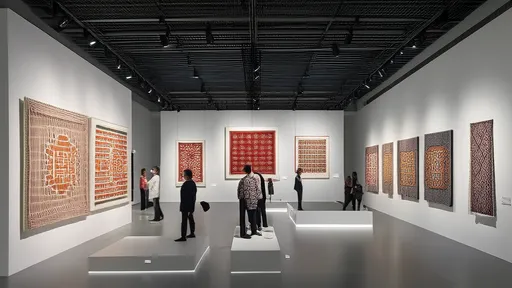
Against the backdrop of Hangzhou's vibrant art scene, a remarkable public project has taken root, weaving together threads of creativity, environmental consciousness, and community spirit. The Floating Star Dome, a central feature of the ongoing Hangzhou Fiber Art Exhibition, officially launched its ambitious public engagement program last weekend, casting a new light on the potential of discarded materials and youthful imagination.
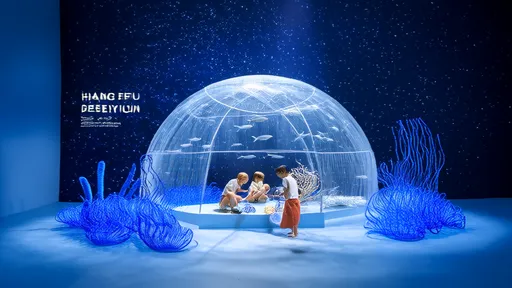
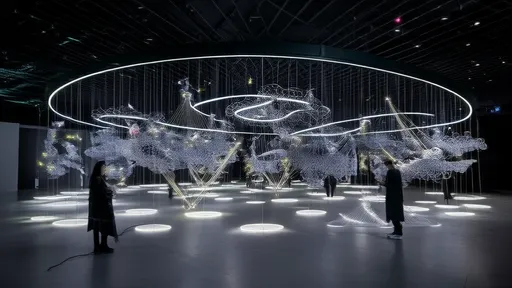
The project's core is as poetic as its name. The concept of the "Floating Star Dome" is to create a large, immersive canopy—a celestial tapestry suspended within the exhibition hall. This dome, however, is not woven from conventional threads but is destined to be a collaborative masterpiece, its fabric formed by hundreds of unique marine creatures crafted from recycled materials by the hands of local children. The initiative, a brainchild of curator Zhang Wei and ecological artist Li Na, aims to transform public perception of waste, viewing it not as an endpoint but as the raw material for new life and beauty.
On the opening day, the designated workshop space was a hive of controlled, joyful chaos. Dozens of children, aged between six and twelve, gathered around tables piled high with what many would consider trash: plastic bottles of various shapes and sizes, discarded fishing nets retrieved from local waterways, colorful plastic bags, worn-out textiles, and tangles of abandoned ropes. Under the gentle guidance of artist facilitators, these mundane objects began their metamorphosis. The air was filled with the sounds of focused snipping, the rustle of plastic, and the excited chatter of discovery. "We are not just teaching them to make art," explained artist Li Na, watching a young girl carefully attach a fin made from a blue detergent bottle to a bottle-body fish. "We are teaching them a new language, a language where a plastic bottle can become a jellyfish, and a broken net can tell the story of the ocean's resilience."
The choice of marine life as the central theme is profoundly intentional. Hangzhou, though an inland city, is deeply connected to water through its famous West Lake and the Qiantang River. The project serves as a poignant reminder that the environmental impact of human consumption, particularly plastic waste, knows no geographical boundaries. "The trash we discard inland eventually finds its way to the sea, affecting marine ecosystems thousands of miles away," Zhang Wei stated during his opening address. "By having children create these beautiful, fragile sea creatures from the very materials that threaten them, we create a powerful, visceral connection. They are not just building sculptures; they are giving a voice to the ocean."
The creative process itself is a lesson in innovation and problem-solving. Children are encouraged to examine the properties of each material—the transparency of a water bottle, the flexibility of a plastic bag, the sturdy structure of a cardboard tube. They learn to see potential where others see waste. A cluster of white plastic forks becomes the radiant tentacles of a sea anemone; a section of a clear PET bottle, when heated and shaped, transforms into the delicate, flowing form of a jellyfish. One particularly ambitious group of older children is working on a sea turtle, its shell meticulously patterned with caps from various bottles. This hands-on engagement demystifies the concepts of "upcycling" and "sustainability," embedding them not as abstract academic terms, but as tangible, creative actions.
Beyond the immediate artistic output, The Floating Star Dome project is meticulously designed as a long-term educational endeavor. The initial workshop is just the first wave. Over the next three months, the project will host a series of weekend sessions, inviting schools and community groups to participate. Each session will focus on a different family of marine animals—from the shoals of small, glittering fish made from shredded mylar and wire to larger, more complex forms like manta rays and octopuses. The goal is to accumulate enough creations to fully construct the envisioned star dome by the exhibition's conclusion, a collective testament to the community's effort.
The social dimension of the project is equally significant. The workshop space has become a rare egalitarian zone where children from diverse backgrounds collaborate. They share materials, exchange ideas, and help each other with challenging constructions. Parents, often initially hesitant observers, find themselves drawn into the process, helping to hold pieces together or offering suggestions, fostering intergenerational dialogue about consumption and responsibility. "I see my daughter looking at a plastic wrapper differently now," shared one parent. "She asked me if we could save it to make something instead of throwing it away. That shift in perspective is invaluable."
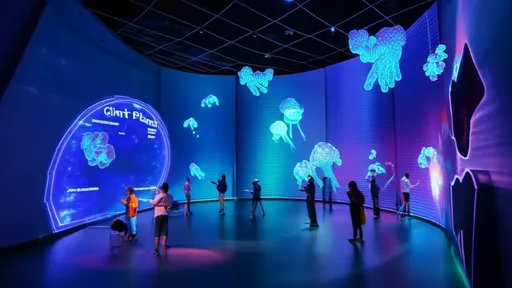
As the project progresses, the individual creations will gradually be assembled onto the large, net-like structure that will form the dome. This final installation will be a breathtaking spectacle—a constellation of recycled marine life floating overhead, each piece glowing gently under strategically placed lights, representing a star in a man-made yet deeply natural cosmos. Visitors walking under the dome will be enveloped in this shimmering ecosystem, encouraged to look up and reflect on the interconnectedness of human action and the natural world.
The Floating Star Dome ultimately transcends the boundaries of a typical art exhibition. It is a living, growing organism that embodies a powerful message of hope and regeneration. It demonstrates that art is not a passive object to be observed but an active process that can engage a community, educate a generation, and inspire change. By entrusting children with the task of reimagining our waste, the project invests in a future where creativity and environmental stewardship are inextricably linked. The woven star dome will not just be a display; it will be a promise, a fragile, beautiful galaxy built from what was once lost, now found and filled with new purpose, floating as a beacon for a more conscious and creative world.
By /Sep 25, 2025

By /Sep 25, 2025
By /Sep 25, 2025
By /Sep 25, 2025
By /Sep 25, 2025
By /Sep 25, 2025
By /Sep 25, 2025
By /Sep 25, 2025
By /Sep 25, 2025
By /Sep 25, 2025
By /Sep 25, 2025
By /Sep 25, 2025
By /Sep 25, 2025
By /Sep 25, 2025
By /Sep 25, 2025
By /Sep 25, 2025
By /Sep 25, 2025
By /Sep 25, 2025
By /Sep 25, 2025
By /Sep 25, 2025
