Hangzhou's art scene is currently pulsating with a profound energy as the city hosts its latest Fiber Art Triennial, an exhibition that challenges conventional perceptions of both material and meaning. Titled "Reconstructing the Cosmos," this ambitious showcase transcends the traditional boundaries of textile art, positioning fiber not merely as a medium but as a fundamental language for exploring cultural awakening and the future trajectory of artistic expression. The event has quickly established itself as a critical platform for dialogue, drawing artists, curators, and thinkers from across the globe to engage with some of the most pressing questions of our time.
The very choice of fiber as a central theme is a deliberate and powerful statement. In an age dominated by digital screens and virtual realities, the triennial returns to the tactile, the handmade, and the intimately human. Fiber is a material deeply woven into the fabric of human history, from the earliest spun threads to the complex tapestries of ancient civilizations. By focusing on this elemental medium, the exhibition invites a re-examination of our roots. It asks visitors to consider the threads—both literal and metaphorical—that connect us to our past, to each other, and to the natural world. This is not a nostalgic look backward, but rather a strategic mining of ancestral knowledge to inform a more conscious and sustainable future.
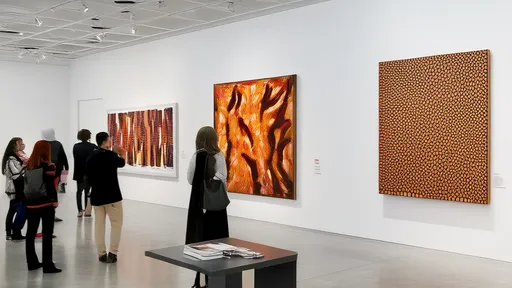
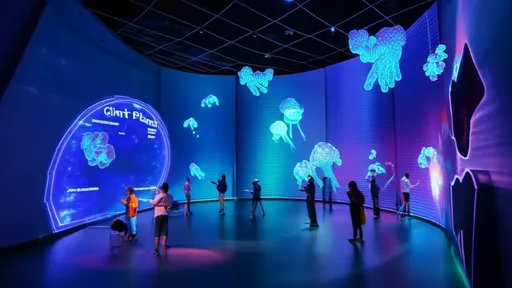
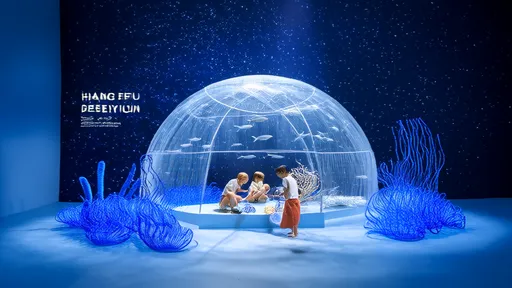
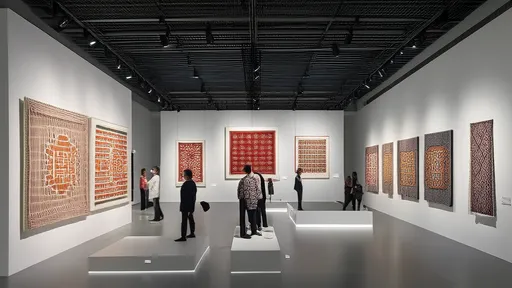
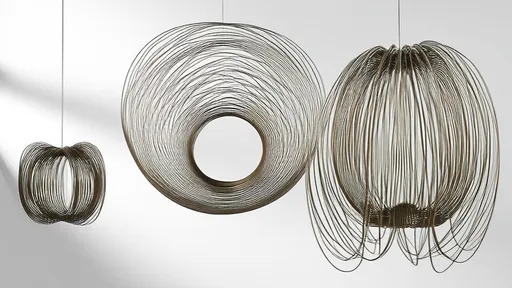
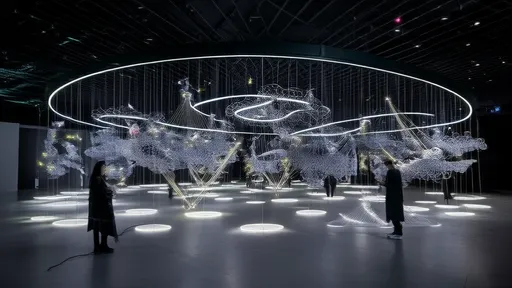
Walking through the expansive halls of the Zhejiang Art Museum, the main venue for the triennial, one is immediately struck by the sheer diversity of works on display. The concept of "reconstructing the cosmos" is interpreted in myriad ways. Some artists engage in a literal sense, creating vast, suspended installations that resemble celestial bodies or galactic nebulae, using silk, wool, and synthetic filaments to map out imagined universes. These pieces are awe-inspiring in their scale, encouraging viewers to look up and contemplate their place within a vast, interconnected system. The interplay of light and shadow on the textured surfaces of these works creates a constantly shifting environment, much like the cosmos itself.
Other artists take a more grounded, yet equally profound, approach. A particularly compelling series of works utilizes natural dyes and locally sourced, organic materials, drawing a direct line from the earth to the artwork. These pieces speak to a growing cultural awakening around ecological responsibility. They are not just objects of beauty but are imbued with a narrative of place, process, and sustainability. The artists become storytellers, using fiber to narrate tales of environmental change, resource depletion, and the urgent need for harmony with our planet. This represents a significant shift in the role of the artist, from a creator of aesthetic objects to an active participant in cultural and ecological discourse.
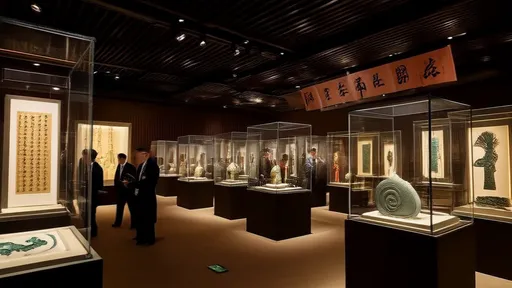
A key thread running through the entire exhibition is the reclamation and re-contextualization of traditional craft techniques. Many contemporary artists featured in the triennial have spent years mastering skills such as weaving, embroidery, and knotting—practices often historically marginalized as "women's work" or mere "craft" rather than "high art." By integrating these techniques into conceptually rigorous and large-scale installations, these artists are performing a crucial act of cultural re-evaluation. They are asserting the intellectual and philosophical depth inherent in these practices, challenging the hierarchical distinctions that have long plagued the art world. This act of elevation is a powerful form of cultural awakening in itself, recognizing the wisdom embedded in hands-on making.
The international dimension of the triennial further enriches its exploration of cultural consciousness. Artists from Asia, Europe, the Americas, and Africa bring their unique perspectives, often using fiber to explore themes of migration, diaspora, and hybrid identity. A stunning installation by a Latin American artist, for instance, incorporates woven patterns indigenous to her homeland with industrial materials found in her current urban environment, creating a visual metaphor for the complex layering of personal and cultural history. These cross-cultural dialogues, facilitated by the universal language of fiber, highlight both the distinctiveness of individual cultures and the shared human experiences that bind them together.
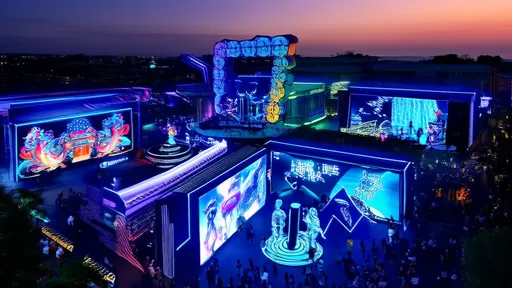
Technology, rather than being positioned in opposition to the handmade, appears as a collaborative force in many exhibits. Several artists employ digital looms, 3D printing with biodegradable filaments, and interactive light projections that respond to the presence of viewers. This fusion of the ancient and the algorithmic points toward a possible future for art—one that is not a choice between tradition and innovation, but a synthesis of both. It suggests that the path forward involves harnessing new tools to amplify, rather than replace, the depth of human skill and cultural memory. The future of art, as proposed by this triennial, is hybrid, responsive, and deeply thoughtful.
Ultimately, "Reconstructing the Cosmos" is more than an art exhibition; it is a manifesto for a new kind of cultural engagement. It argues that awakening is not a passive state of awareness but an active process of making, questioning, and re-making our world. The artists participating in this triennial are not just creating art; they are weaving new narratives, knotting together past and future, and stitching together a vision of a more interconnected and mindful existence. The fibers they use become conduits for this transformation—flexible, strong, and capable of forming infinitely complex and beautiful structures.
As the triennial continues to attract visitors and critical acclaim, its impact is likely to resonate far beyond the walls of the museum. It serves as a potent reminder that in a fragmented world, the act of weaving—whether it be of cloth, community, or ideas—remains one of our most powerful tools for creating meaning and connection. The future of art, as glimpsed in Hangzhou, appears to be one that is deeply material, ethically engaged, and unafraid to draw on the deepest wells of human culture to imagine a brighter, more woven tomorrow.
By /Sep 25, 2025
By /Sep 25, 2025
By /Sep 25, 2025
By /Sep 25, 2025
By /Sep 25, 2025
By /Sep 25, 2025
By /Sep 25, 2025
By /Sep 25, 2025
By /Sep 25, 2025
By /Sep 25, 2025
By /Sep 25, 2025
By /Sep 25, 2025
By /Sep 25, 2025
By /Sep 25, 2025
By /Sep 25, 2025
By /Sep 25, 2025
By /Sep 25, 2025
By /Sep 25, 2025
By /Sep 25, 2025
By /Sep 25, 2025
